

Category

Business

Category

California houses some of the most cutting-edge aerospace operations in the world. From military bases to commercial airlines and private jet services, California leads with innovation and scale.

Time is everything in such a fast-moving world. This is where Proponent’s custom kitting solutions can help.

The kit was specifically designed to enhance maintenance and support operations, making it easy for California’s aviation teams to stay organized, efficient, and ready for anything.

The Surprising Reason Why Custom Kitting Powers California Aviation

California has a huge and varied aerospace sector. From those of a defense contractor in Palmdale, to a cargo operator in Oakland. To you, meeting demanding schedules is the rule, not the exception.

These pressures are exactly what Proponent’s custom kitting is designed to address:

  • Categorize the components by aircraft type/job
  • Guaranteed traceability through labeling and documentation
  • Shipping kits on schedule from California facilities

This reduces the need for maintenance staff to speculate and waste time, allowing them to get directly to work on the task of repairing the problem.

Local Support, Faster Turnaround

Proponent benefits from being a local player. Proponent is headquartered in Los Angeles, CA providing fast supply solutions for every urgent need with warehouses and distribution hubs positioned very near critical airports like LAX, SFO, and SAN.

From a fleet maintenance job in Fresno to an aircraft overhaul in San Diego, Proponent makes sure the correct parts get where they are needed, when they are needed around the world.

Benefits of localized support include:

  • Faster shipping and response times
  • Reduced freight costs
  • Personalized service from nearby experts

And this matters a great deal in a state where being first is often the difference between winning and losing.

Tailored Kits for Every Operation

There are no two hard-and-fast rules for aviation programs. A corporate jet facility in Van Nuys has vastly different needs from a military base in El Centro.

This is why Proponent has built every custom kitting solution from scratch. The company operates tailored to each client’s situation, prevailing aircraft type, maintenance programs, and regulatory requirement-cost and ELGB Tech Solutions team work very closely with clients.

The result?

  • Predefined Kits, each of which corresponds to the precise work specifications
  • Improved workflow and technician productivity
  • FAA & Industry Standards Compliant

Yes — because it’s more intelligent and scalable than any parts and inventory tool.

Quality You Can Rely On

With the California ethos of aerospace, and the Proponent backyard in mind.

Every kit goes through extensive inspections before it’s sent. That includes:

  • Verification of every component
  • Secure packaging
  • Complete traceability and compliance documentation

When you are servicing commercial fleets or military aircraft, you can be sure of the quality that meets or exceeds industry expectations.

Final Approach

Efficiency is not a luxury in California’s high-speed aviation sector—it is what you live and die by. Proponent’s custom kitting simplifies logistics, reduces downtime, and maintains safety for operators across the state Proponent offers the solutions, assistance and service that powers California, from Silicon Valley start-ups to legacy airlines in Los Angeles. It can be relied upon for ensuring full compliance with both regional and industry standards, thanks to the localized skill. With solutions that scale to any operation, Proponent enables maintenance teams to do work smarter instead of harder. In a state that thrives on innovation, Proponent is getting every plane back in the air.
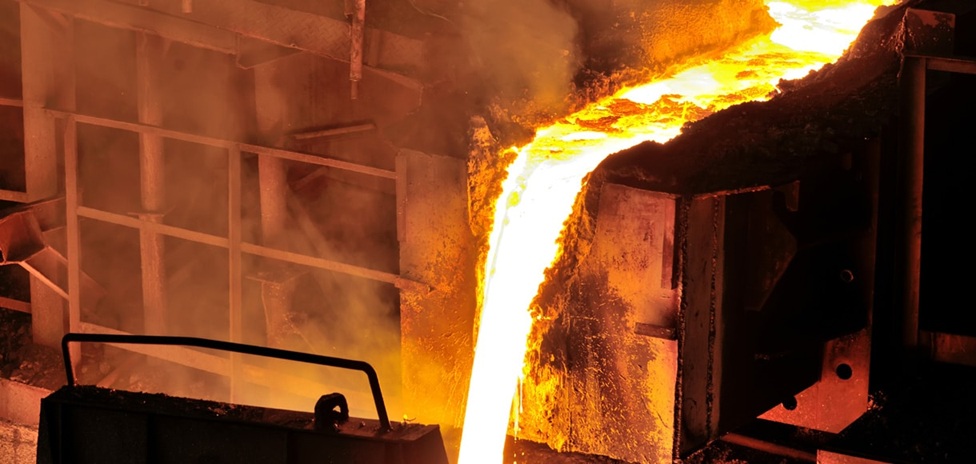
For more than two millenniums, metal casting has been instrumental in the industrial growth. It is the foundation of manufacturing everything from prehistoric tools to automobile parts. The process must evolve as the technology evolves.

General Kinematics (GK) is at the forefront of that evolution, offering solutions for storage and reuse. GK are leading the path for what a foundry can do in the 21st century, by combining engineering innovation with real world practicality.

Smarter Machines, Better Results

This advanced vibratory equipment is at the core of GK’s success. Their goal is to make those systems top-performing, but also most intelligent. Important technologies consist of:

  • Vibratory Conveyors: Made for applications requiring high temperatures and heavy loads
  • Shakeout Systems: Provide quick, high-capacity sand and casting separation
  • Sand Plants: Ensure uniform quality of sand — an important parameter for accuracy in casting

These machines decrease manual labor, minimize mistakes, and keep production operating smoothly.

Engineering That Adapts to You

Foundries aren’t one-size-fits-all. GK gets it which is why their solutions are designed to fit your operation — not the other way around.

Benefits include:

  • Real-time monitoring for predictive maintenance
  • Personalized hardware that fits your current workflow
  • Integrate in current systems through plugins, as well modular designs

It is cutting costs, almost eliminating downtime, and providing room for slow competing vertical growth that requires next to no major disruption.

Casting with a Greener Footprint

Sustainability cannot be a merely disposable buzzword. It is the need of the hour for businesses. GK helps foundries meet environmental goals with:

  • Reclaim systems using recycled materials
  • Energy-efficient motion technology
  • Dust reduction tools

These features allow companies to comply with the agencies, shrink their utility papers, and limit paper waste — all of which combined results in a boost in productivity.

Serving Multiple Industries

GK states that it serves the full spectrum of the market with its equipment. Their metal casting solutions support production in:

  • Automotive manufacturing
  • Aerospace and defense
  • Construction and heavy machinery
  • Industrial fabrication

However, each industry has its own difficulties. GK descends head first with flexible systems that are accurate, fast, and controlled.

Support That Goes Beyond Installation

It is not just the engineering in the first place but long-term support to success which separates GK from others. Their service model includes:

  • On-site training for smooth implementation
  • Use-specific maintenance plans
  • Guaranteed availability of essential spares

This level of service works to guarantee another season of reliability from your inline production equipment.

Takeaways: Gearing Up for Tomorrow

The nature of manufacturers in the dominant manufacturing environment today means that any time not spent advancing will likely result in falling behind. This blending of tradition and technology isn’t about the old vs. the new, it’s what General Kinematics does to help foundries push forward their innovations.

From retrofitting an outdated facility to new construction, GK has the tools, experience, and support you need to keep your business thriving. This enables you to continue building and selling intelligent solutions that are designed to grow with your business, as well as accommodate the evolving needs.

Plastics are ubiquitous — in bottles, bags, packaging, textiles and so much else that we use every day. But not all plastic goes in the blue bin. The key to preventing waste and saving the environment is to know which plastics can be recycled. With the right knowledge, we can all make better decisions and create a more sustainable future.

Know Your Plastics: What the 7 Numbers Really Mean

If you flip a plastic container, you’ll often find a little triangle with a number inside. The Society of the Plastics Industry code is this. It identifies the kind of plastic and the processing methods for recycling facilities.

Each number is a specific type of plastic — and not all are created equal.

PET (Polyethylene Terephthalate)

  • Commonly found in: Food packing, soda bottles, and water bottles
  • Recycling status: Recycling accepted by most curbside services can be easily recycled
  • End products: Textile fibers, new containers, carpets

HDPE (High-Density Polyethylene)

  • Commonly found in: Milk jugs, shampoo bottles and detergent containers
  • Recycling status: Very commonly accepted
  • End products: Plastic lumber, benches, piping

PVC (Polyvinyl Chloride)

  • Commonly found in: Pipes, vinyl floors, medical devices
  • Recycling status: Rarely accepted curbside
  • End products: Paneling, cables, non-essential construction materials

LDPE (Low-Density Polyethylene)

  • Commonly found in: Grocery bags, bread bags, squeeze bottles
  • Recycling status: Accepted at participating drop-off locations
  • End products: Garbage bags, outdoor items

PP (Polypropylene)

  • Commonly found in: Yogurt containers, straws, parts for cars
  • Recycling status: Increasingly accepted
  • End products: Battery cases, bins, automotive applications

PS (Polystyrene)

  • Commonly found in: Seen in packaging peanuts, foam cups, and takeout containers
  • Recycling status: Rarely recycled
  • End products: Is used in insulation or school supplies

Other (Mixed Plastics)

  • Commonly found in: Sunglasses, CDs, multilayered packaging
  • Recycling status: Hard and seldomly accepted
  • End products: Plastic Wood, custom parts

Sort Smart: What You Can Do

Knowing which plastics are recyclable won’t cut it — you must follow through. Here are some ways to do better at recycling:

  • If unsure, utilize plastics #1 and #2.
  • Always rinse containers before recycling.
  • Do not recycle greasy or food-soiled items.
  • Don’t commingle plastics in one bin.

Technology and Smarter Recycling

Given the present need for effective recycling, the role of technology is crucial. Such as at General Kinematics where complex waste streams are sorted, cleaned, and processed with state-of-the-art vibratory systems. These devices will also ensure that more of what we discard makes it back into the production cycle, and not into the dump.

Final Thoughts

Knowing the types of plastic and how to recycle them can allow people and businesses to make greener choices. And when we capture the right materials and don’t make basic mistakes, the impacts can be tangible and measurable.

Thanks to advancements in technologies developed by companies like General Kinematics, recycling is always getting better, which brings hope for a cleaner and more responsible tomorrow.

These initiatives help to eliminate wastage and conserve precious resources for the generations to come. By adopting smarter recycling, we can all play a part in a more resilient circular economy. Each informed decision you make today contributes to a healthier planet tomorrow.

In today’s fast-moving world of smart factories and sophisticated logistics, automation is not just a luxury — it is a given. But installing machines and software is only the beginning. Real efficiency only comes when everything jibes. Enter control system integration. It brings every aspect of your business together in one well-oiled machine.

What is Control System Integration?

Control system integration is the joining of various automated systems so they can act as a single system. This comprises devices such as PLCs (Programmable Logic Controllers), HMIs (Human Machine Interfaces), sensors, robotics, as well as multiple software solutions.

The goal? Remove standalone systems and connect into one more smoothly running system with real-time updates, fluent communication, better control of activities.

Why is It So Important?

In modern installations, sometimes both old and new gear is used. When you have these tools, they don’t talk to each other and you slow down, mess up, and end up wasting a lot of time. Control system Integration helps prevent this, by:

  • Integration of all systems into a single control center for centralization
  • A reduction in the amount of manual labor and the possibility of making mistakes
  • Improving data sharing and visibility
  • Scaling operations for expansion in the future
  • Facilitating less time-consuming problem-solving and more accurate predictive maintenance


An integrated system will help companies run smarter and react more quickly.

Key Components That are Integrated

Each business will have different requirements here, but the smash hit business standard parts that may become part of your stack are coined here:

  • PLC and the SCADA systems – These are the control stations.
  • Monitoring and control with real-time feedback are provided by sensors and actuators.
  • Conveyors and robotics – Deal with physical motion
  • Industrial IOT devices – Gather and submit data in real time
  • ERP and MES systems – Connect the production level with the decision-makers!

Connected, these systems provide more effective analysis, streamlined workflows and quicker decisions.

Common Challenges in Integration

Though the advantages are obvious, there can be challenges in system integration:

  • Old versus new technology incompatibility
  • Cybersecurity concerns during data sharing
  • Complicated network setups
  • Lost manuals or information on old machines
  • Limited internal knowledge or skills

When faced with such challenges, companies frequently look to companies specializing in integration.

Why You Should Hire Integration Professionals

When you hire the services of a control system integration company, you’re not just paying someone to hook up some wires. These pros get your technical setup, and they get your business goals. They offer:

  • Customized design solutions
  • Upgrades for outdated systems
  • Conformed in accordance with safety and industry requirements
  • Ongoing support for smooth operation

They streamline it so that you can trust that the integration is: smooth, robust, and future-proof.

Final Thoughts

There’s more at stake to control system integration than simply a technical change. In this way, it makes it possible for people, machines, and systems to work together efficiently. Integration work is increasingly “time-critical” for companies that count on tying together systems to minimize downtime and increase efficiency, analysts say.

If you want to grow or update your hospital, connecting your systems isn’t just a nice thing to do — it’s a necessary one.