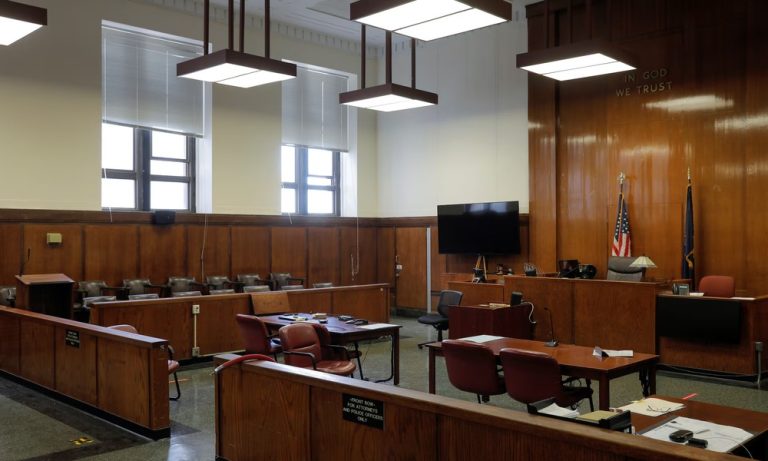
People who work in the federal courts occupy a distinctive and often misunderstood position in the federal employment landscape. Clerks of Court staff, law clerks, courtroom deputies, court reporters, probation officers, pretrial services officers, financial and human resources staff, and information technology personnel at the Southern District of New York and the Eastern District of New York are federal employees – but they are not executive branch employees, and the legal framework that governs employment disputes for most of the federal workforce does not automatically apply to them. For any New York Federal employee attorney approached by someone who works at the SDNY or EDNY and is facing a discrimination complaint, a harassment situation, or an adverse personnel action, the first analytical task is determining which dispute resolution system actually governs – because it is categorically different from the MSPB, the EEOC federal sector complaint process, and the other mechanisms that cover the vast majority of federal civilian employment.
The federal judiciary’s approach to employment disputes reflects the constitutional separation of powers and the judiciary’s institutional independence in ways that create both structural protections and genuine accountability gaps that court employees need to understand clearly.
The Judicial Branch Is Not the Executive Branch: Why This Changes Everything
The Merit Systems Protection Board exists to provide independent review of adverse personnel actions against executive branch employees. The EEOC’s federal sector complaint process exists to enforce anti-discrimination law within executive branch agencies. The Office of Special Counsel handles whistleblower complaints involving executive branch agencies. None of these bodies have jurisdiction over employees of the federal courts.
Article III federal judges – including the district judges, magistrate judges, and bankruptcy judges who preside in SDNY and EDNY – hold life-tenured positions under Article III of the Constitution, and the courts themselves operate as a separate constitutional branch. That constitutional structure means the judicial branch established its own employment dispute resolution framework rather than submitting to executive branch oversight mechanisms.
The primary framework is the Judicial Branch Fair Employment Practices System, adopted by the federal judiciary and administered through the processes established by the Judicial Conference of the United States. Under this system, court employees who experience discrimination, harassment, or other workplace violations have access to an internal dispute resolution process that operates within the judicial branch – not through the EEOC or the MSPB.
This internal system has undergone significant development in recent years, particularly following high-profile revelations about judicial misconduct and workplace harassment in federal courts that emerged beginning around 2017. The Judiciary Accountability Act of 2022 introduced reforms intended to strengthen protections for court employees, including law clerks and other staff who had historically had the most limited recourse.
The Employment Dispute Resolution Plan: How Judicial Branch Complaints Work
The Judicial Branch’s EDR Plan – each circuit and each court implements the framework set out by the Judicial Conference – provides a multi-step internal process for resolving workplace complaints. For SDNY and EDNY employees, the relevant procedures are those of the Second Circuit and the individual courts.
The EDR process typically begins with informal counseling, followed by formal mediation, and then an adjudicatory hearing if the matter isn’t resolved earlier. The hearing is conducted within the court system, not before an independent federal agency or board. Remedies available include back pay, compensatory damages, reinstatement, and injunctive relief.
The EDR Plan explicitly covers discrimination and harassment based on race, color, sex, national origin, religion, disability, age, and other protected characteristics. Following the 2022 reforms, protections for law clerks and other court staff were explicitly expanded, and the ability to make confidential reports was strengthened. The Judiciary’s commitment to investigating complaints made through the EDR process now includes defined timelines and procedural safeguards that were less formalized before the reforms.
One critical limitation of the EDR system that court employees need to understand: the internal nature of the process means that complaints are resolved within the institution against which they are being brought. There is no external review body with independent authority to assess whether the process was conducted fairly or whether the outcome was correct, at least not through the standard executive branch channels. Federal courts are not subject to EEOC enforcement actions or MSPB review.
The Title VII Exception: When Federal Courts Are Covered by External Enforcement
One significant development in federal court employee rights is the extension of Title VII’s coverage to federal court employees for certain purposes. Prior to legislative amendments, the judiciary’s exemption from standard Title VII enforcement created a genuine coverage gap. Those gaps have been narrowed, though not entirely eliminated.
Federal court employees can now file Title VII claims against the employing court – ultimately the United States as the employer – in federal district court in certain circumstances, following exhaustion of the EDR process. The precise scope of these Title VII rights for judicial employees, and the procedural pathway for pursuing them, requires careful analysis because the case law and the applicable procedures are still developing.
The Judiciary Accountability Act’s reforms and prior enactments created specific mechanisms for certain court employees – including law clerks – to pursue external complaints when the internal EDR process has been exhausted or when the complaint involves conduct by the judge to whom the law clerk is assigned. The ability to report to the inspectors general structure within the judicial branch, and ultimately to bring certain claims before an Article III court, has expanded since 2017 even if it remains more constrained than what executive branch employees can access.
Probation Officers and Pretrial Services Officers: A Different Analysis
Probation officers and pretrial services officers at SDNY and EDNY occupy a position worth distinguishing from other court staff. They are federal court employees, subject to the judicial branch’s personnel system, but their roles have characteristics that create specific employment law considerations.
Probation officers conduct presentence investigations and supervise offenders on federal supervision. Pretrial services officers supervise defendants released pending trial. Both roles involve significant interaction with individuals in the criminal justice system, require specific professional credentials, and operate under standards established by both the courts and the Administrative Office of the U.S. Courts.
Disability accommodation requests for probation and pretrial services officers can be particularly complex because of the physical and operational requirements of community supervision work. Whether specific field supervision requirements can be modified as reasonable accommodations, or whether those requirements are essential functions that cannot be accommodated without undue hardship, is a fact-specific analysis. The Rehabilitation Act’s reasonable accommodation obligation applies to these employees through the judicial branch framework, but how that obligation is administered and adjudicated is governed by the EDR system rather than the standard federal EEO process.
For probation and pretrial officers in SDNY and EDNY who face adverse personnel actions or accommodation denials, the EDR Plan’s procedures and timelines control. Importantly, these employees should be alert to the specific deadlines that the applicable EDR Plan establishes – the window for initiating a complaint under the judicial branch framework is not the same as the 45-day deadline that governs executive branch EEO complaints, and missing the applicable deadline under the court’s specific EDR procedures can be just as consequential.
Law Clerks: The Most Vulnerable Cohort
Federal law clerks occupy the most vulnerable position in the court employment system precisely because their employment relationship is uniquely personal. A law clerk is hired by and works for a specific judge, whose authority over the clerkship is essentially plenary. The power dynamic is among the most unequal in any professional employment relationship, and the career stakes – a federal clerkship is a career-defining credential – make the cost of raising concerns unusually high.
The 2017 revelations about judicial misconduct, the letter signed by hundreds of law clerks and attorneys about the inadequacy of reporting mechanisms, and the subsequent legislative and Judicial Conference responses all reflect the degree to which the existing system had failed this population. The reforms that followed – including stronger confidentiality protections, the ability to report to circuit executives without going through the employing judge, and expanded access to outside counsel – represent genuine improvements over what existed before, even if the system remains more constrained than what executive branch employees have.
Law clerks in New York – at SDNY, EDNY, and the Second Circuit Court of Appeals itself – who experience harassment, discrimination, or retaliation for raising concerns are not without legal options, but those options run through mechanisms that require specific knowledge of the post-2017 and post-2022 reforms and how they interact with the Second Circuit’s specific implementation of the EDR framework.
Consulting a New York Federal Employee Attorney About Judicial Branch Employment
The Judicial Branch Employment Dispute Resolution system, the post-2022 reforms, the limited Title VII external enforcement pathway, and the specific considerations for probation officers, pretrial services staff, and law clerks all require legal counsel familiar with the judicial branch’s personnel framework – which is distinct from executive branch federal employment law in ways that make standard federal employment law experience insufficient on its own.
The Mundaca Law Firm represents federal employees throughout New York, including employees of the federal courts at SDNY, EDNY, and other New York-area judicial units who are navigating workplace discrimination, harassment, or personnel disputes through the judicial branch framework. Contact the firm to schedule a consultation and understand which procedures apply to your specific situation.