Category

Pets

Category

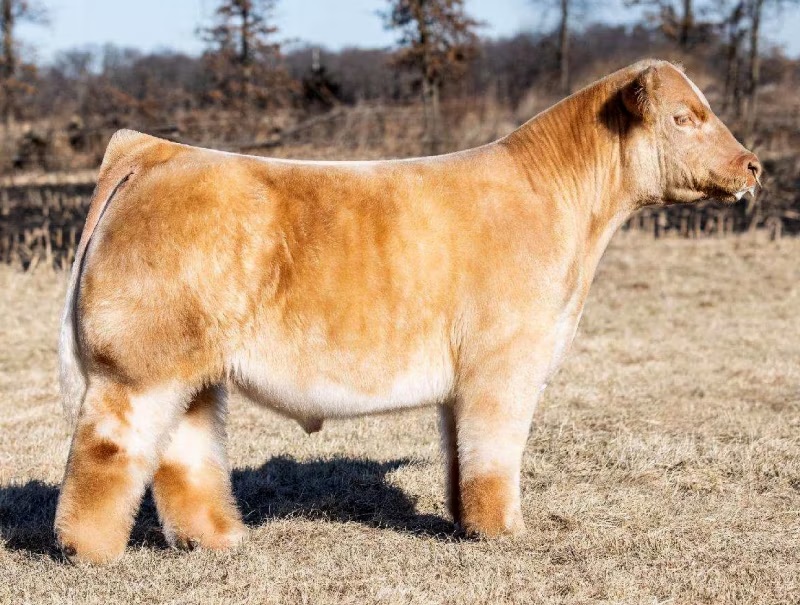
Club calves, produced for 4-H and FFA livestock exhibits, are popular among farmers, ranchers, and livestock enthusiasts. These animals need a large financial commitment but also provide many other advantages. We shall discuss the economic, educational, and societal benefits of investing in club calves in this post.

Economic potential and ROI

Investing in club calves for profit is appealing. Conformation, genetics, and market readiness make club calves valuable in livestock exhibitions and auctions. Elite bloodlines improve performance and appearance, raising selling values. Those involved in youth agriculture initiatives might get a high ROI. By choosing high-quality calves, investors may breed and rear animals that display well and grow in value.

Diversifying agricultural portfolios using club calves is also possible. When paired with maize, soybeans, or other cash crops, livestock farming may be profitable. Livestock integration may boost soil health and profitability via rotational grazing. Diversification may reduce crop price volatility concerns, making club calves desirable.

Youth Education Growth

Club calves are informative, especially for 4-H and FFA members. Animal husbandry, nutrition, and management skills are learned via hands-on learning. This event deepens participants’ awareness of animal welfare as they care for their calves and keep them healthy and ready for competition. This engagement also teaches kids responsibility and hard effort.

Learning about animal care goes beyond technical skills. Peers, mentors, and judges help program participants learn important interpersonal skills. They learn how to market themselves and their animals, receive criticism, and engage with agricultural stakeholders. This comprehensive learning method prepares the next generation of farmers and ranchers for success in and out of agriculture.

Promoting Community and Networks

Owning club calves provides community and networking possibilities. Events like livestock exhibitions and contests attract families, mentors, agricultural companies, and industry leaders. These gatherings allow investors to network and maybe form partnerships, collaborations, or sales. Sharing experiences may expand one’s expertise and introduce investors to new cattle industry concepts, methods, and practices.

Innovation and Genetic Improvement

The goal of genetic improvement and innovation drives club calves investment. Breeders seek characteristics that improve performance and disease resistance in the cattle business. Buyers get great animals and support genetic advances by buying high-quality calves. Club calves may improve with each generation, benefitting producers and consumers.

Ethics and Sustainability

Club calves fit with sustainable agriculture techniques. Responsible cattle grazing and nutrient cycling help the ecosystem. If managed effectively, club calf operations may promote soil health and biodiversity in sustainable agriculture. Investment in performance and health-bred animals reduces the need for antibiotics and other health treatments, meeting customer demand for sustainably produced livestock.

Conclusion: A Complex Investment

Finally, investing in club calves gives economic benefits, educational progress, community participation, genetic advancement, and sustainability. With the cattle sector evolving, demand for high-quality, well-bred animals remains robust. Club calf investment promotes individual aspirations and agricultural community progress. If you want to make a difference in agriculture, buying club calves may be profitable, educational, or fulfilling.

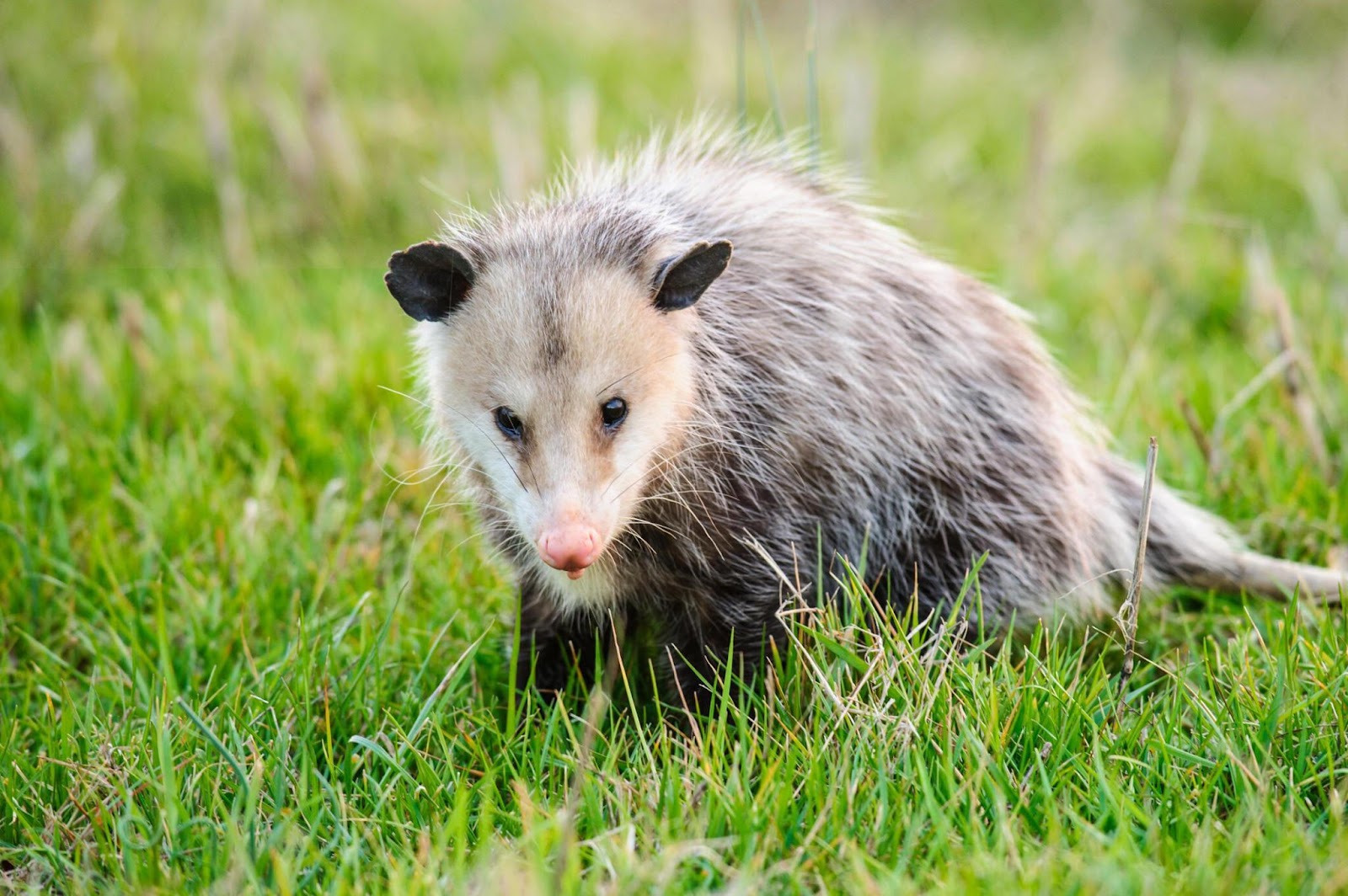
You may have heard dialogues in movies like ‘playing possum’, meaning pretending to lie low or be asleep. It is, in reality, a trick opossums use in real life to protect themselves from predators.

Aren’t they smart? People often dismissed them as a hissing nuisance, but they were creatures rich with surprising abilities. Beneath that unassuming exterior lies a survival with excellent adaptability skills.

Opossum has earned the title of North America’s only marsupial because of its immunity to certain toxins to their dramatic act of ‘playing possum’.

Resistance to venom

  • Unlike most mammals, opossums possess a unique mutation in their nicotinic acetylcholine receptors.
  • These mutations make them immune to neurotoxins’ paralyzing effects, so they survive against venomous predators.
  • Their resilience extends beyond snakes. They can handle the sting of bees and scorpions.
  • Their body temperature is low [around 90 to 94 degrees Fahrenheit], so they cannot contract rabies.
  • They even prey on venomous creatures with minimal risk because of their toxin-resistance superpower.

Playing possum act

They are nocturnal animals, and they turn into a con artist at any time. They mimic death as a last-ditch effort to convince predators they are no longer viable targets.

  • When threatened, they enter in an immobile state, complete with a stiff body and foaming at the mouth.
  • Their body emits a foul odour, which enhances the illusion further.
  • This dramatic act fools predators into believing they have encountered a decayed or diseased animal, so they move away without attacking.

Skilled climbers

Sometimes their appearance seems clumsy, but their prehensile tails, hairless and almost rat-like, act as an extra limb.

They grip branches with their tails and navigate through trees with surprising agility. This skill is resourceful in helping them forage for food in the forest canopy.

Natures clean-up crew

Opossums have 50 teeth, which allows them to consume a wide variety of food.

  • Fruits
  • Insects
  • Carrion
  • Small vertebrates

This adaptability level has made them strive successfully across various habitats ranging from dense forests to urban backyards.

Remarkable fertility & child-rearing

  • A female opossum can give birth to a small size of 25 joeys at a time.
  • These tiny newborns are blind and hairless.
  • They must instinctively crawl into their mother’s pouch and attach themselves to one of her 13 nipples.
  • Competition is fierce, and the luckiest or strongest survive. This harsh reality ensures that only a handful of joeys reach maturity.
  • The incredible feat of the underdeveloped creatures embarking from the birth canal to their mother’s pouch is a marvel. Guided by instinct and a strong sense of smell, they climb onto their mother’s fur and follow the scent trail she leaves to reach the pouch.
  • Once they are safely nestled in the pouch, the joeys stay attached to her nipples for around two months.
  • They grow fur and develop sight.
  • As they get strong and mature, they venture out of the pouch for some time.
  • If the mother feels threatened, she transports her entire litter by holding each in her mouth by tail. This is a surprisingly graceful move for such an ungainly creature.

The opossum is a creature full of surprises. Next time you see them, appreciate this underestimated animal for its unique adaptation skills to survive in a challenging world.

With a plump and small body, the French Pug seems to be a muscular and compact. The height at the withers is about 30 cm and they weigh between 8 and 14 kilos. However, a characteristic that distinguishes this breed are the upright bat ears, the angular head, as well as the short snout and tail. The coat is smooth and without sub-layer and according to official standards the coat can have different shades. Thus, we find French Bulldogs with shades ranging from black to white, passing through the fawn and brindle with or without white spots.

French bulldog: A Recent Breed with Ancient Roots

The Frenchie Dog belongs to the family of molossos dogs. This family also includes the Pug, the Dogue de Bordeaux or French Mastiff and the English Mastiff. Dogue type dogs are the ancestors of this breed. However, the development of the French bulldog breed only started in the second half of the 19th century. And so it can be said that this is a very recent breed. Furthermore, experts are not in agreement about the breeds that gave rise to the French bulldog. One of the direct ancestors of this breed is thought to be the little English bulldog that English weavers took with them when traveling to Normandy.

The English bulldog was created for dog fights, as well as for fighting bulls. In fact, the origin of his name is related to this practice bull means bull in English. After the prohibition of this terrible practice, the breeding of all dog breeds changed. From then on, these burly big eyes became primarily pet animals.

French bulldog: A Popular Breed

It is considered that the French Bulldog were initially crossed with Terriers. These crossings will have been carried out by hunters, but for a short period of time. Crossings with Pug dogs will also have happened. In 1880 the first French bulldog club was created in Paris. However, when some specimens of French Bulldogs were brought to the United Kingdom, they were classified as English Bulldogs, as there were no standards that could define the French breed. French bulldog standards were established in 1888. The recognized patriarch of the breed is the famous male Loupi, who is mentioned in almost every book on the genealogy of this breed.

It was mainly in Paris that this breed received special attention. The French bulldog became very popular with dog lovers who had no means of purchasing dogs of more expensive breeds. However, the unusual appearance and the friendliness of the French Bulldogs won the European nobility.

I recognized after an hour or so approximately roughly roughly that my nine years of age Miniature Schnauzer was lacking. To my dismay the entrance ongoing to get ajar after i had introduced inside the large bag of pet food for the house within the vehicle. It absolutely was now getting dark after several neighbors i’d researched minimizing the street along with the alley, we did not find him. Buddies referred to as other buddies that makes it a residential district effort. We’d walked, then driven around our neighborhood. He was nowhere found.

Doggie Dilemma: Limiting Flame Retardant Exposure in Pets | Earthjustice

It absolutely was obscure that my dog was lacking. My feelings ran wild, believing that something terrible had elevated to obtain of him. I had been expecting the worst within the products may have happen, getting him hit through an automobile or easily easily easily wiped by helping cover their an crazy animal. While he didn’t go back home and in addition it was getting late, I didn’t figure out what else I’m able to do. He’s like family i needed him safe conscious of me.

Worried about how they ought to be feeling, all lonely and cold and hungry I reported his being lost for your police, your dog shelter, r / c station furthermore to printed his disappearance on social media listing his description to attain with others about my dilemma. He’d your pet tag on his collar along with his name “Sparky” and address and phone number. I am aware when anybody would find him they’d certainly call. I’d difficulty trying to sleep wondering were they’re. He’d never ran away and off to begin not returning, before. Feeling so responsible I beginning searching up information on the internet to provide time away.

I stored studying since i have have have felt strongly that individuals would recover where my dog went. It came out like I’d find him and my instincts proven that actually was.

Coronavirus in pets, French research strategy and a duplication detector

Used to visit sleep and automobile over a consultation asking if my dog “Sparky” was lost. She’d seen my publish on social media. Among my pals was her friend although being unsure of she would be the anybody to discover my dog. He’d came miles . 5 away crossing a substantial, busy avenue and it also was discovered inside a women’s garage today under her vehicle. She stated they’d left the garage doorways open when asleep and her youthful girl saw a black dog run beneath the vehicle within the window. They’d difficulty getting him from beneath the vehicle. The little girl finally got him to get provided to her.

They introduced him for that house. He’ll be considered a grimy dog and incredibly scared, but so happy to see me and be home finally.