
Mattresses are massive, unwieldy, and notoriously difficult to dispose of responsibly. Yet, across North America, an unprecedented wave of innovation is transforming them from landfill burdens into sources of recoverable materials. With millions of mattresses reaching the end of their lifecycle each year, the region is finally seeing real momentum toward sustainable solutions.
Mattress Recycling Landscape in North America
Current Recycling Rates and Challenges
The sheer scale of mattress disposal is staggering. In Canada and the United States combined, tens of millions of mattresses are discarded annually. Despite their recyclable components, wood, metal, textiles, and foam, most have historically ended up in landfills due to bulky handling, contamination, and the absence of cost-effective recycling processes. Even today, the North American mattress recycling rate remains under 20 percent, dwarfed by the mountain of discarded units each year.
Regional Variations: Quebec and Ontario vs. Other Provinces and States
Some regions, however, are quietly outperforming. Between Quebec and Ontario, more than 400,000 mattresses are recycled each year, reflecting targeted programs and advanced infrastructure. In contrast, much of the rest of Canada and the U.S. lags behind, with patchwork services and lower public awareness. This imbalance reveals how local policies, funding, and partnerships can tip the scales toward greener outcomes.
| Region | Estimated Mattresses Recycled (2023) | Recycling Rate |
|————————-|————————————–|——————|
| Quebec & Ontario | 400,000+ | ~40% |
| Rest of Canada | <100,000 | ~10% |
| United States (average) | ~1,500,000 | <20% |
| France | 1,000,000+ | ~50% |
Innovations in Mattress Recycling Technologies
Mechanical Separation vs. Chemical Recycling Methods
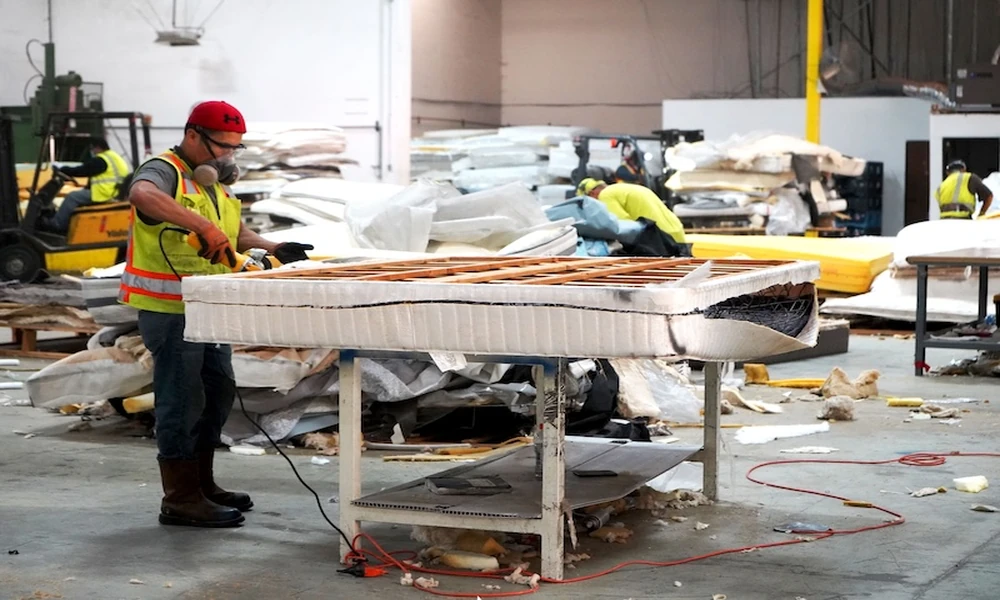
Traditional mattress recycling relies on manual or semi-automated dismantling, workers or machines break down mattresses, sorting materials for further processing. Mechanical separation remains the bedrock, but emerging chemical recycling methods are now being piloted to handle complex foam and textile blends, potentially unlocking even more recovery from each unit.
Advances in Automated Dismantling and Sorting
Automation is accelerating the pace and scale of mattress recycling. New robotic arms and conveyor-based systems can safely deconstruct mattresses, separate springs, shred foam, and divert textiles with minimal human intervention. These advances promise lower labor costs, higher throughput, and reduced exposure to contaminants for workers.
Case Study: Recyc-Matelas’ Revolutionary Process
A standout example comes from Recyc-Matelas, a Canadian leader in the field. Their process combines proprietary equipment with streamlined logistics, allowing them to efficiently recycle hundreds of thousands of units annually. Anyone seeking details on their approach or interested in mattress disposal can explore Recyc-Matelas mattress removal. Their success demonstrates how commitment to both technology and education can drive real-world recycling rates.
Policy and Regulatory Frameworks Impacting Recycling Rates
Comparison of Canadian and U.S. Mattress Recycling Policies
Policy plays a pivotal role in recycling outcomes. Canadian provinces like Quebec and Ontario have adopted landfill bans and financial incentives, supporting dedicated recycling facilities. In the U.S., only a handful of states, California, Connecticut, Rhode Island, have mandated producer responsibility laws for mattresses, leading to significant disparities nationwide.
Incentives and Mandates Driving Industry Participation
Where governments mandate recycling or offer financial incentives, industry participation climbs. Rebates for recycled units, landfill surcharges, and grants for new infrastructure all make a critical difference. Without these levers, recycling remains economically challenging for businesses.
Lessons from European Models: France’s High Recycling Rates
Europe, particularly France, offers a blueprint for success. France recycles over one million mattresses annually and boasts rates around 50 percent, thanks to strict producer responsibility laws and nationwide collection networks. North America is watching closely as it crafts its own next steps.
Industry Collaboration and Circular Economy Initiatives
Manufacturer and Retailer Involvement in Take-Back Programs
Brands are increasingly stepping up. Several mattress manufacturers and major retailers now fund or operate take-back programs, ensuring their products can be returned and recycled, often at point of purchase. These programs not only divert waste but foster circularity within the industry.
Partnerships Between Municipalities and Recycling Firms
Local governments are joining forces with recycling businesses, providing drop-off locations, curbside pickup, and public events to gather used mattresses. These partnerships have proven essential in regions where public infrastructure is limited.
Impact of Extended Producer Responsibility (EPR) Programs
Extended Producer Responsibility (EPR) programs shift disposal costs from taxpayers to manufacturers, creating a powerful incentive to design for recyclability and invest in collection. Wherever EPR is enforced, recycling rates climb.
Consumer Awareness and Behavioral Drivers
Education Campaigns and Their Effectiveness
Recycling can only work if people know it exists. Public awareness campaigns, whether through social media, local events, or retailer partnerships, have significantly boosted participation in targeted regions. Yet, many consumers remain unaware of available options.
Barriers to Mattress Recycling from a Consumer Perspective
Obstacles persist: high pickup fees, inconvenient drop-off sites, and lack of information deter participation. Reducing these barriers is key to scaling efforts.
Environmental and Economic Impacts of Enhanced Recycling
Reduction in Landfill Waste and Resource Recovery
Every recycled mattress means less landfill waste and fewer virgin materials extracted. Steel springs are melted down, foams find new life in carpet underlay, and textiles can be repurposed, reducing greenhouse gas emissions and saving energy.
Job Creation and Market Development for Recycled Materials
Recycling drives local job creation, from logistics and dismantling to material processing. As demand for recycled content grows, new markets for recovered materials continue to emerge.
Future Trends and Opportunities
Emerging Technologies on the Horizon
AI-driven sorting, advanced chemical recycling, and scalable robotics are poised to further boost efficiency and recovery rates in the near future.
Potential for Cross-Border Cooperation and Standardization
Harmonizing policies across provinces, states, and countries could streamline logistics, reduce costs, and make mattress recycling more accessible to all.
Scaling Up: Addressing Capacity Constraints and Infrastructure Needs
With innovation and collaboration, North America has the potential to match or exceed European mattress recycling rates. Expanding capacity, modernizing facilities, and closing knowledge gaps will be essential in reaching that goal.
The days of seeing mattresses abandoned curbside or buried beneath tons of trash may be numbered, thanks to a new generation of recycling solutions and the collective will to transform waste into resources.

Comments are closed.